What Does "Learner-Driven" Really Mean? A Guide for Kansas City Parents
By Spencer Steinert, Head of School, Wonder KC
If you've started looking at schools beyond the traditional options in Kansas City, you've probably seen the phrase learner-driven. It sounds good. It also sounds a lot like student-centered, personalized, and child-led, words that show up on nearly every school website now.
They aren't the same thing. The difference between them may be the most important thing to understand before you choose a school.
Three classrooms, one fraction problem
Picture three rooms of nine-year-olds learning to add fractions.
In the first room, the teacher explains the method at the board, assigns twenty practice problems, and grades them on Friday. The adult decides what gets learned, how, when, and whether it was learned well enough. This is teacher-directed learning, and it's how most of us went to school.
In the second room, the teacher knows one student loves baking, so she builds the lesson around doubling a cookie recipe. It's warmer and more engaging. But the adult is still making the decisions. She chose the goal, designed the activity, and will judge the result. This is student-centered learning. The child is the focus, but the adult is still driving.
In the third room, a nine-year-old has set her own weekly goal to finish a fractions unit, and she's stuck. Before asking an adult, she goes to a classmate who finished the unit last month, and they work it out together. When a guide does step in, the guide doesn't explain the method. The guide asks, "What have you tried? What do you notice about the bottom numbers?" On Friday, she checks her own progress against the goal she set and tells her studio what worked and what didn't.
That third room is learner-driven. The child is driving. The adults build the road, set the guardrails, and ask good questions, but they don't take the wheel.
It starts with a belief about children
Acton Academy co-founder Laura Sandefer describes the foundation of the model in five words: "Every child is a genius."
She isn't talking about IQ. She means every child has something that belongs only to them: a particular way of seeing, making, and caring about the world. That gift can fade if nobody helps the child find it and sharpen it.
If you really believe that, everything else changes. You stop seeing children as empty containers waiting to be filled. You start seeing them as people who can run their own meetings, settle their own disputes, and decide when their work is good enough to show the world. That belief drives our mission at Wonder KC: helping each child find a calling that will change the world.
What learner-driven looks like at Wonder KC
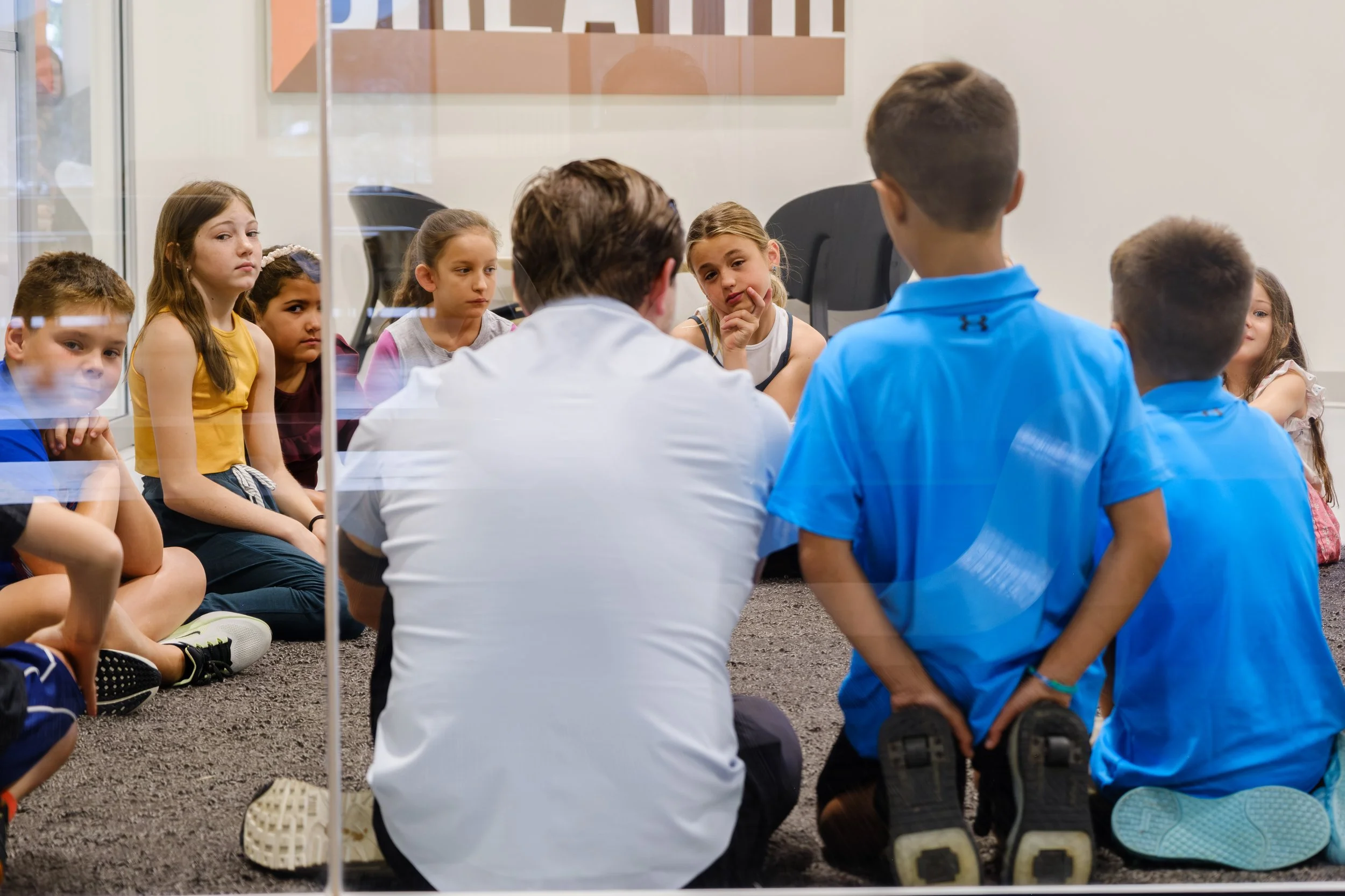
In our elementary and middle school studios, a typical week includes:
Socratic discussions. We open the day with a launch: a question, a story, or a dilemma that learners debate. There's never one right answer. The point is to think clearly, listen carefully, and be willing to change your mind when someone makes a better argument.
Core skills with personal goals. Learners work on reading, writing, and math at their own pace, set weekly goals, and track their own progress. A child who is ready to move ahead can. A child who needs more time takes it without being called "behind."
Quests. These are hands-on, team-based projects such as building, designing, researching, or starting a business. The work has to hold up in the real world, not just earn a grade.
Exhibitions. Instead of report cards, learners present their work to families and guests and answer questions about it.
Self-government. Each year, learners write and sign their own studio contract, the promises they'll hold one another to. They handle much of the day-to-day accountability themselves.
Guides, not teachers. We call our adults guides because their job is to protect the learning environment and ask questions, not to hand out answers.
What learner-driven does not mean
It doesn't mean "do whatever you want." Freedom comes with responsibility. Learners choose how and in what order they tackle their work, but the work has to get done, and done well. Choices have consequences, and learning to own those consequences is part of the education.
It doesn't mean unstructured. A learner-driven studio is carefully designed. The structure just comes from systems, goals, and accountability to classmates instead of bells and lectures.
It doesn't mean easy. Children used to being told exactly what to do often find the first weeks harder, not easier. That struggle is where the growth happens.
The hardest adjustment is usually for parents
Learner-driven education is often a bigger change for parents than for kids.
Most of us grew up in the first classroom. When our child struggles, every instinct says to step in: explain it, fix it, email someone. In a learner-driven school, the most loving thing you can do is often to step back and ask a question instead:
"What have you tried so far?"
"Who could you ask for help?"
"Do you want me to just listen, or do you want ideas?"
It feels awkward at first. Over time, you watch your child become someone who solves problems instead of waiting for someone else to solve them.
Is a learner-driven school right for your family?
It may be a strong fit if:
You care about your child's character and independence as much as their test scores.
You're willing to let your child struggle, and sometimes fail, while the stakes are low.
You want your child to love learning, not just finish assignments.
You're ready to grow alongside your child.
It may not be the right fit if you want traditional grades, nightly homework, and a teacher-led day. That's a perfectly good choice. It's just a different one.
Frequently asked questions
Is learner-driven the same as student-centered? No. Student-centered classrooms design lessons around the child's interests, but adults still set the goals and judge the results. In a learner-driven school, children set their own goals, manage their own time, and hold themselves and each other accountable, with adults acting as guides.
How do you know children are learning without grades? Learners track their progress against goals they set themselves, and they show their work publicly at Exhibitions each session, where families can see exactly what was accomplished. Hard work and goals are tracked, celebrated, and learners held accountable publicly with respect.
Is Wonder KC an Acton Academy? Yes. Wonder KC is part of Acton Academy, a network of learner-driven private schools that Laura and Jeff Sandefer founded in 2009.
Where is Wonder KC located? We're in South Kansas City and serve families from across the metro.
What ages do you serve? Our elementary and middle school studios currently serve learners ages 5-15; We are in the process of launching our high school studio to serve the most dedicated learners as they pursue their Next Great Adventure.
Come see it for yourself
The best way to understand learner-driven education is to watch it happen. Schedule a visit to Wonder KC →
This post was inspired by Laura Sandefer's "Back to the Basics: What Does It Really Mean to Be Learner-Driven?" on her blog, On Being an Acton Academy Parent. Laura is the co-founder of Acton Academy and the author of Courage to Grow.