We don’t hand out answers.
LEARNING DESIGN
We hand out better questions, real deadlines, and the freedom to fail while the stakes are still low. Below is exactly how that works, hour by hour, year by year.
ELEMENT 01
Start with thinking.
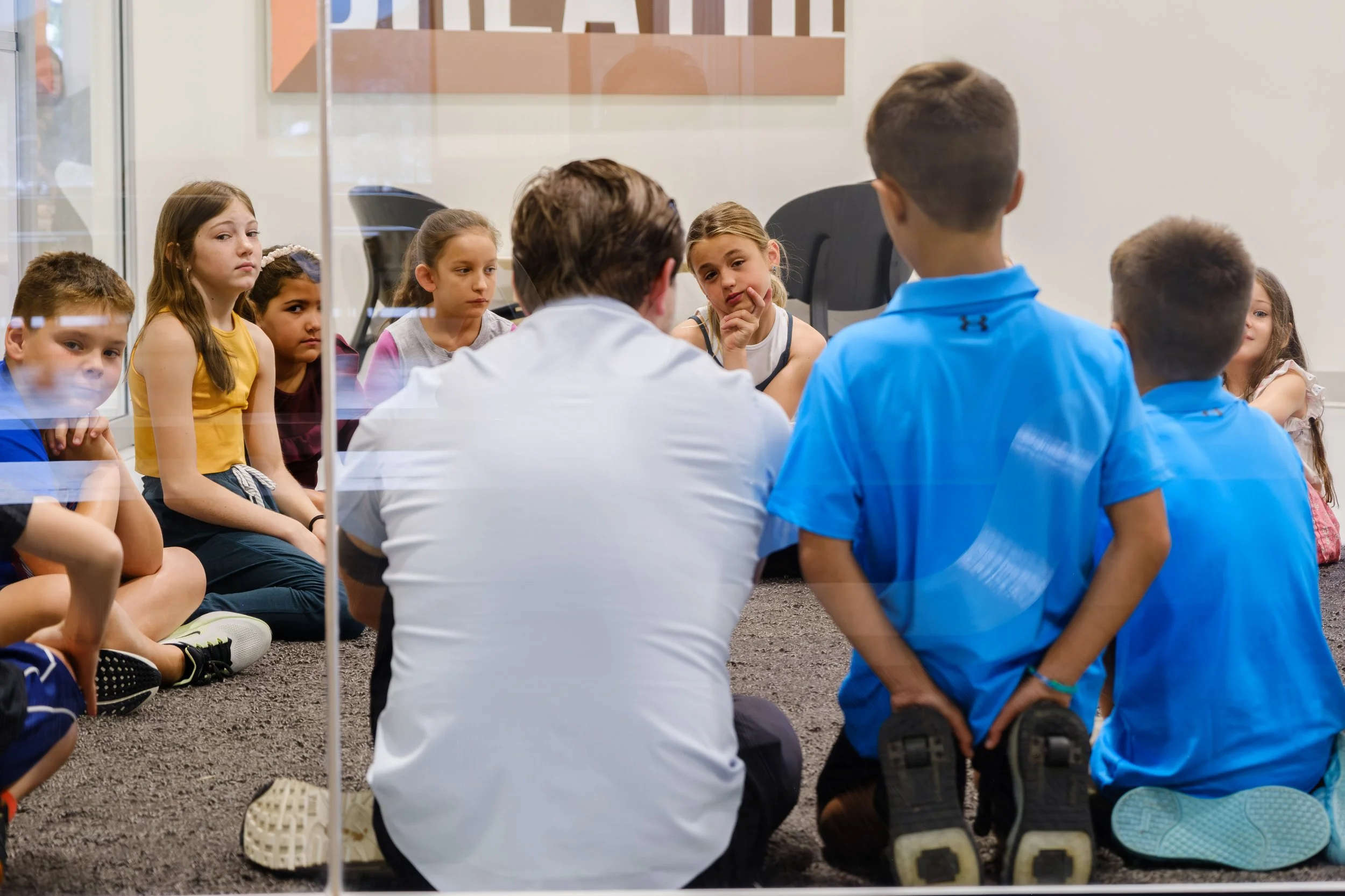
Every day opens with a Socratic discussion. A guide poses a scenario with no comfortable answer. It’s a real moral dilemma, a hard trade-off from history, a question about who owes what to whom.
Learners take a position. Then they get challenged, mostly by each other. They revise, or they hold their ground and explain why. The guide never announces who was right.
Do this twice a day for a decade and a child becomes almost impossible to manipulate.
ELEMENT 02
Two hours of deep work.
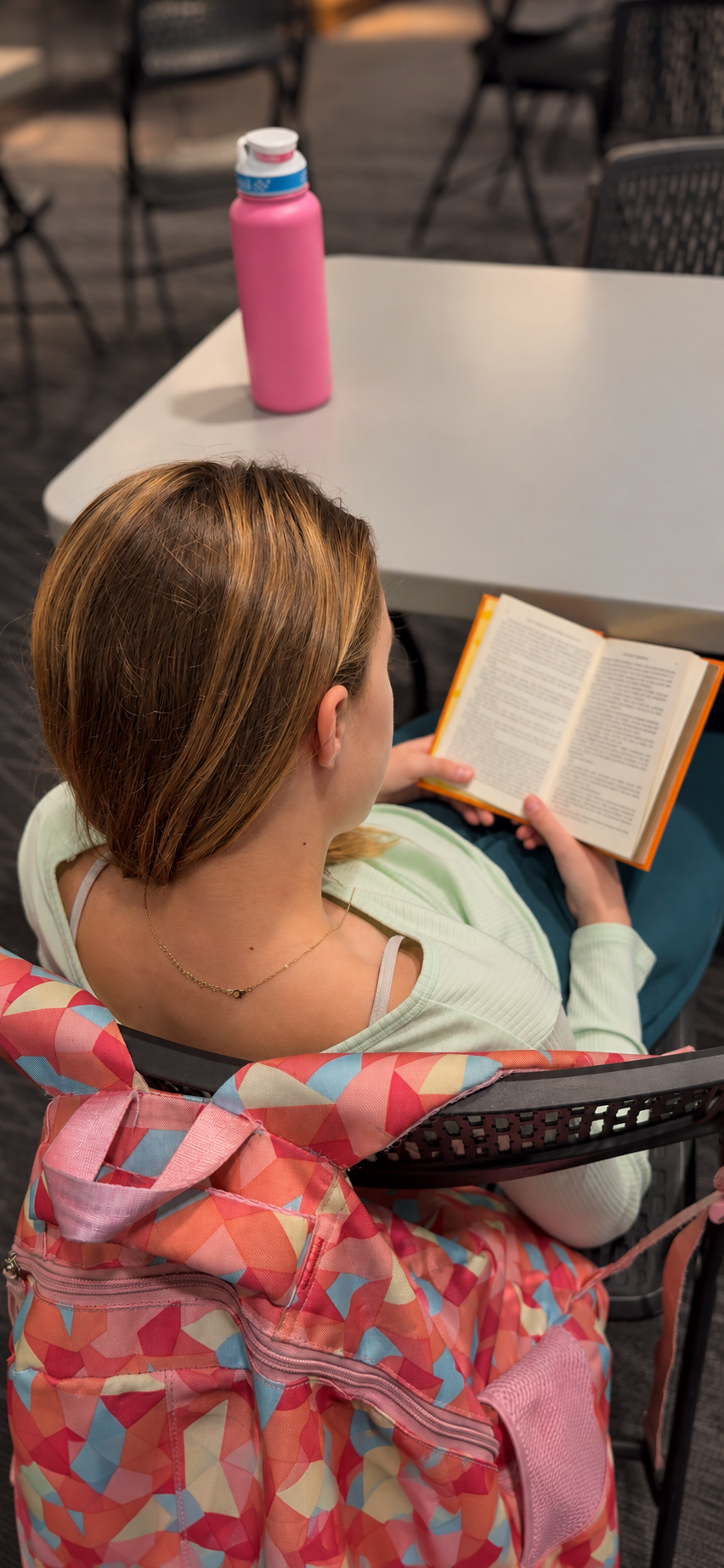
Core Skills (math, reading, writing, spelling) run in one protected morning block. Learners work on adaptive, self-paced platforms that meet them exactly where they are, not where their birthday says they should be.
Nobody moves on until they've demonstrated mastery. Which also means nobody waits. A learner who is ready to run can run, several grade levels in a year is normal here, and so is taking the time you need on a concept that hasn't clicked.
Because the focused work happens during the day, none of it goes home.
ELEMENT 03
Afternoons are for Quests.
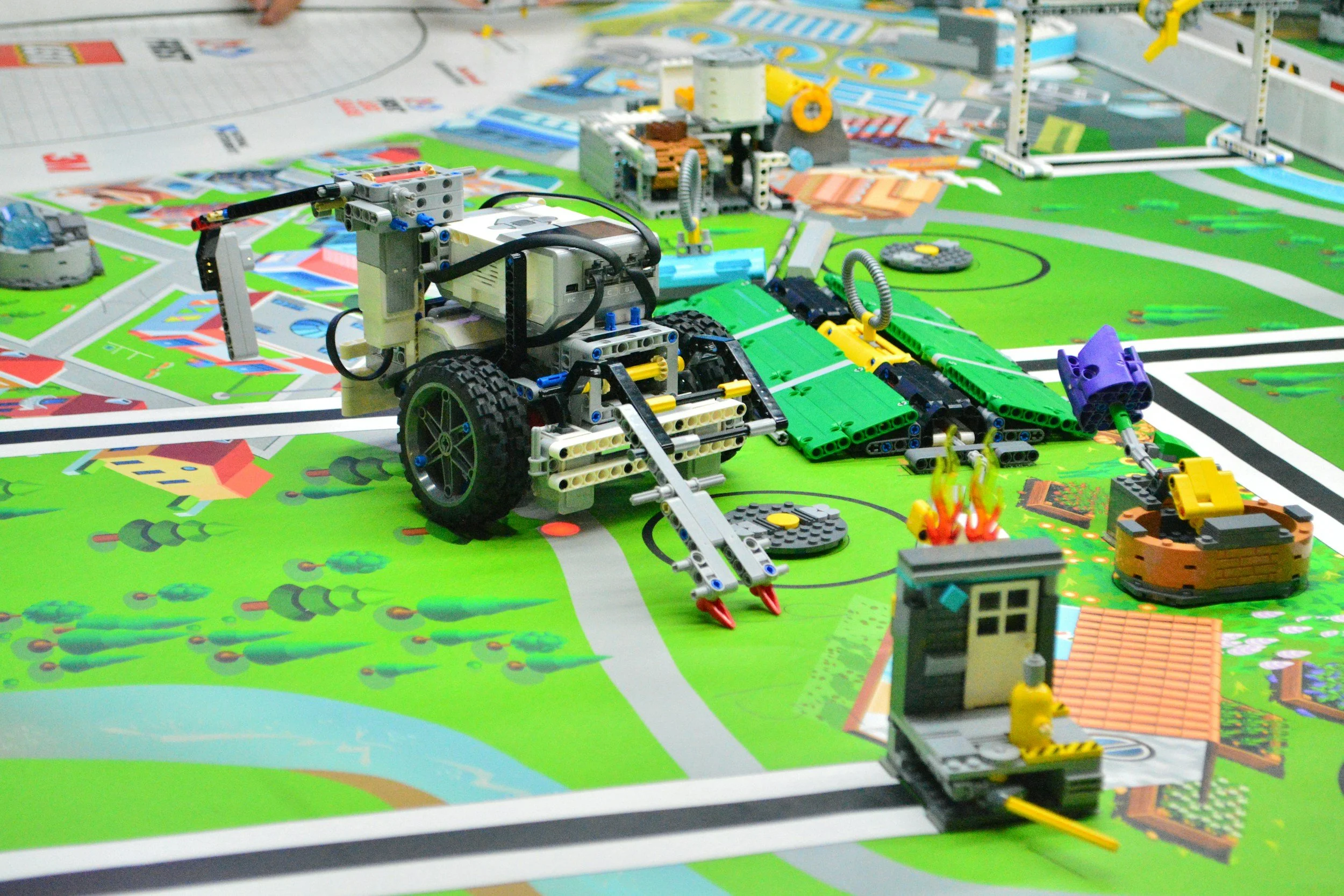
Each afternoon, learners work in teams on a four-to-six week project: rockets, robotics, medical biology, detective chemistry, entrepreneurship, film. Real tools, real constraints, real deadlines.
Every Quest ends the same way: a public Exhibition. Learners stand in front of families and strangers, present what they built, and take questions. There is no hiding in the back row when you are the one at the front of the room.
Interested in attending a public Exhibition? Reserve your spot here.
ELEMENT 04
Ownership is the point.
Learners set goals every morning and report on them every afternoon. They track their own progress. Nobody chases them.
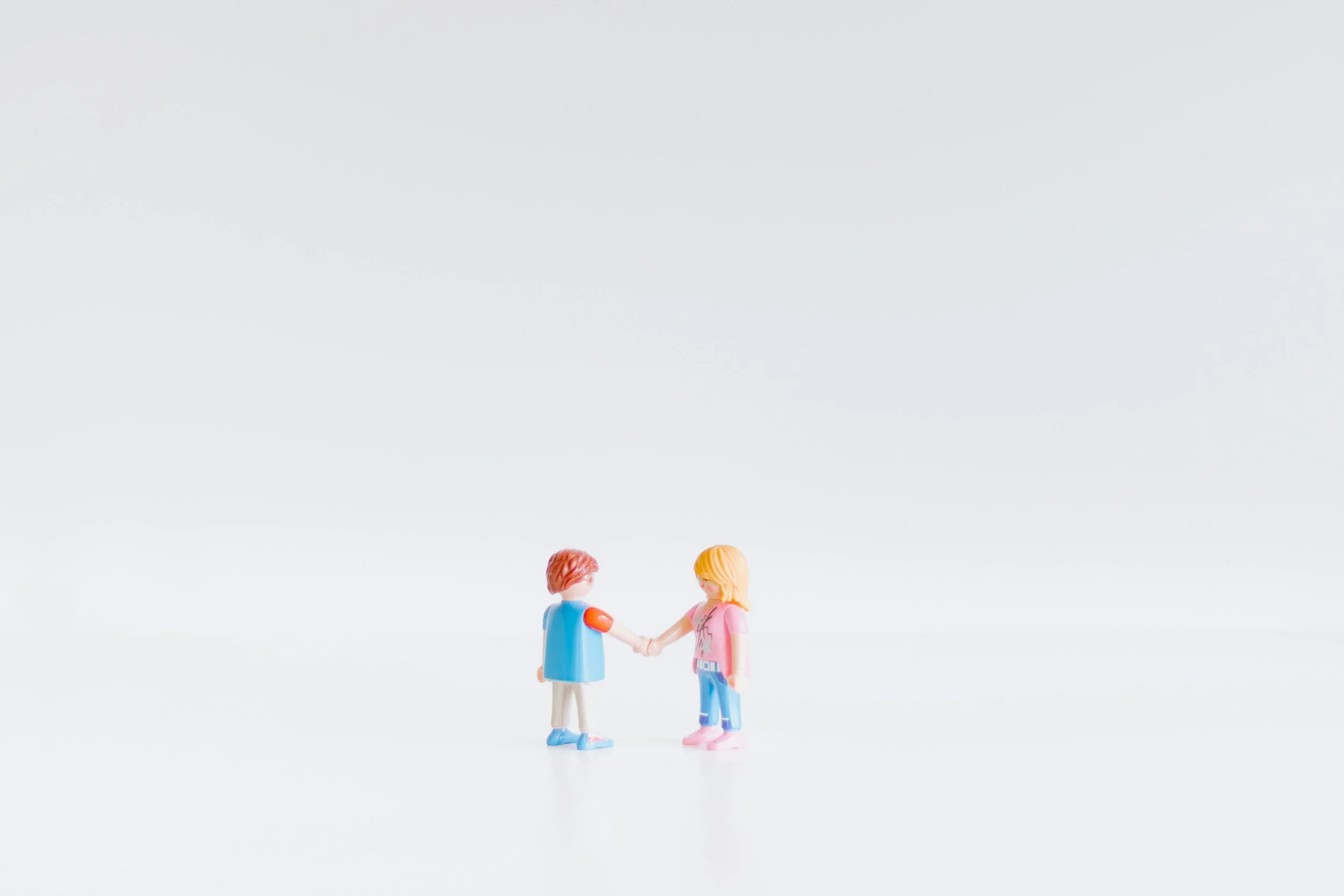
It extends past academics. Learners write and sign a Contract of Promises governing how the studio runs. They hold each other to it. When someone falls short, the response isn't punishment from an adult: it's repair, in front of peers who were counting on them.
We'll be straight with you: peer accountability is the part of this model families ask about most. It takes real facilitation to keep it constructive rather than adversarial. Ask us about it on your visit, we'd rather you see it than take our word for it.
ELEMENT 05
Freedom, earned.
Freedom at Wonder isn't given out on day one. It's earned through habits, follow-through, and the trust of peers and it can be lost.
Freedom without responsibility falls apart. Responsibility without freedom is just compliance with extra steps. Young people need both at once, and they need to feel the connection between them while the consequences are still small.
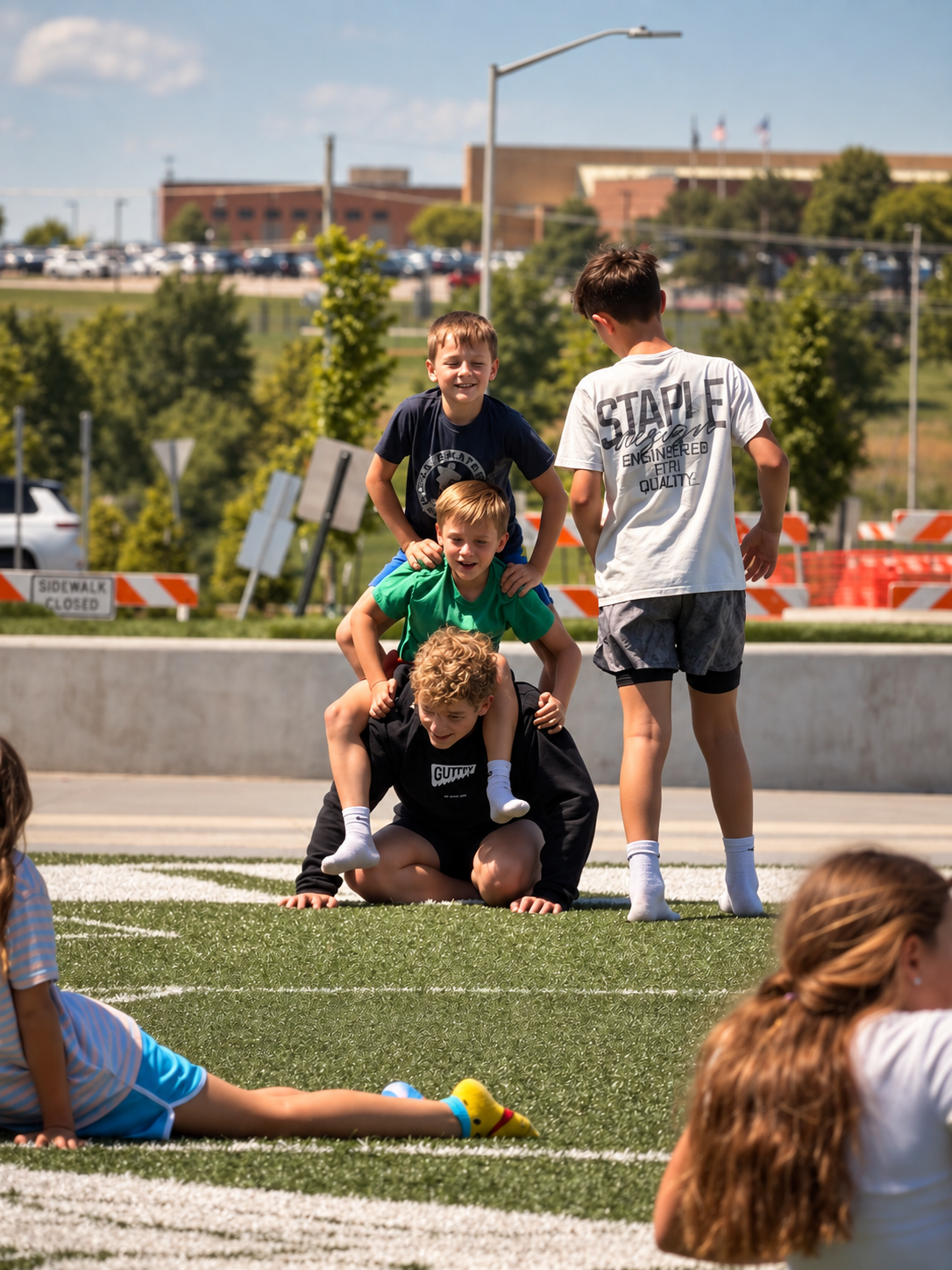
FOUR STUDIOS, ONE JOURNEY
Where your child would start.
Studios are mixed-age on purpose. Each one builds on the last, and moving up is earned rather than automatic.
Spark
"Play is the important work of the child."
The fewest systems and the most play. Exploration of the natural world, a strong reading foundation, and real-world math sense through Montessori manipulatives. Character focus: learning to be a good friend, resolving conflict, and joining a community.
AGES 5-7
ES
"Love of learning must be protected through a delicate balance of challenge and choice."
Project-based foundations in reading, writing, mathematics, science, history, and the arts. Heroes develop stewardship of themselves, their time, their work, and their community: learning to encourage, challenge, and hold one another accountable.
AGES 8-11
MS
"Heroes thrive with a high degree of choice, expectations of excellence, and hard work."
Love of learning turns into serious study. Higher rigor in writing and problem solving, longer focus periods, and knowledge assimilated from powerful books, history, and science through discussion and self-reflection. Grit.
AGES 12-15
Launchpad
"Heads down, get to work. Heads up, Servant Leadership and the Next Great Adventure."
Conceptual mastery of all high school core subjects, clear written and spoken communication, and real-world apprenticeships: connecting the work of learning to real life in preparation for their Next Great Adventure.
AGES 15-18
Each studio is a window onto the same view: a hero who owns their learning, and a community that helps them do it.
WHAT WE MEAN BY THINKING
We don't tell learners what to think.
We're relentless about how.
Reasoning
Explain why, not just what. Claims require evidence. Opinions have to be defendable out loud.
Discernment
Not all ideas are equal. Learners weigh trade-offs and live with what they chose.
Independence
Authority gets questioned, respectfully. Ownership replaces dependence.
Families bring their values. Learners sharpen them through thought. We do not script beliefs, we do not shield learners from disagreement, and we do not reward compliance over courage.
Reading about it only gets you so far.
Come watch a Socratic discussion. It takes fifteen minutes to understand what an hour of description can't.